CPSC
Fieldsheer Heated Socks recall
- Firm
- Fieldsheer Apparel Technologies
- Date issued
- August 7, 2025
- Agency record last updated
- August 7, 2025
- Units
- About 45,000 (as published in the notice)
- Remedy type listed by CPSC
- Refund, Replace
Identifiers in the CPSC notice
| Fieldsheer Heated Socks | Model number | MW37V22-N | found printed on the top left corner of the label on the back of the battery pack | 25423 |
| Fieldsheer Heated Socks | Model number | MW37V122 | found printed on the top left corner of the label on the back of the battery pack | 25423 |
| Fieldsheer Heated Socks | Model number | MWMS05 | found printed on the top left corner of the label on the back of the battery pack | 25423 |
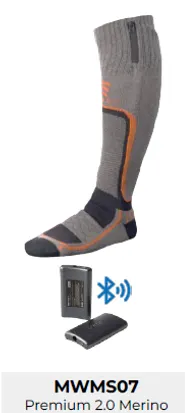
| Fieldsheer Heated Socks | Model number | MWMS07 | found printed on the top left corner of the label on the back of the battery pack | 25423 |
| Fieldsheer Heated Socks | Model number | MWWS07 | found printed on the top left corner of the label on the back of the battery pack | 25423 |
What CPSC says is recalled
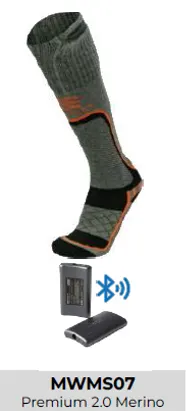
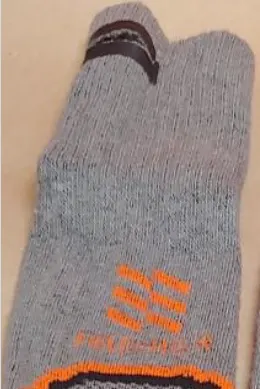
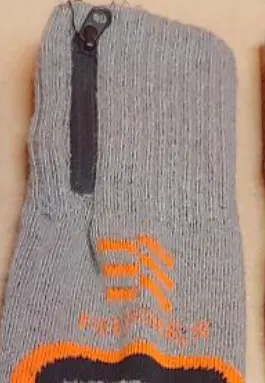
This recall involves Fieldsheer Apparel Technologies' heated socks, models MWMS07, MWWS07 and MWMS05. The recalled merino wool socks were sold in black/gray, gray/orange, gray/pink and black/orange color combinations, and in sizes small through extra-large. The socks came with two lithium-ion battery packs and a charging cable. The socks have a battery pocket with either a slit or a black or gray zipper. Model MWMS05 includes a battery pack with model number MW37V122 and a four-button remote control to adjust the heat settings. Models MWMS07 and MWWS07 include Bluetooth battery packs with model number MW37V22-N. The model number can be found printed on the top left corner of the label on the back of the battery pack. The Fieldsheer logo appears in orange on the front of each sock. Note: Do not throw the lithium-ion battery or device in the trash, the general recycling stream (e.g., street-level or curbside recycling bins), or used battery recycling boxes found at various retail and home improvement stores. Lithium-ion batteries must be disposed of differently than other batteries, because they present a greater risk of fire. Your municipal household hazardous waste (HHW) collection center may accept this lithium-ion battery or device for disposal. Before taking your battery or device to a HHW collection center, contact that office ahead of time and ask whether it accepts lithium-ion batteries. If it does not, contact your municipality for further guidance.
Photos and labels from the CPSC notice
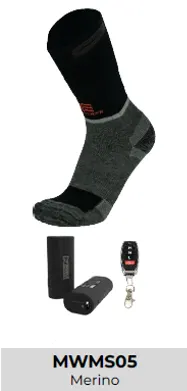

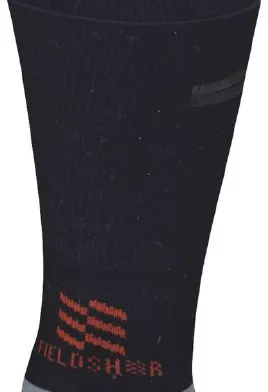

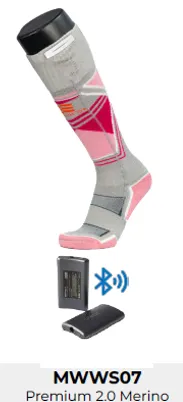

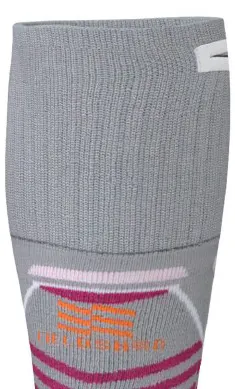





Scope, as published by CPSC
- Distribution
- Nationwide
- Retailers
Scheels All Sports, Fred Meyer, Home Depot, Meijer, Bomgaars Supply, Buchheits, Running Supply, Fleet Farm Wholesale Supply and other nationwide retailers and online at Amazon.com from August 2021 through June 2025 for between $80 and $130.
- Manufactured in
- Bangladesh
What CPSC says about the hazard
The socks can cause pain and discomfort resulting in burns and blisters when worn during high-intensity activities that generate a combination of heat, excessive friction, moisture and pressure, posing an injury hazard.
What CPSC says about incidents and injuries
The firm has received 11 reports of socks causing pain and discomfort, resulting in 4 burns and blisters.
What CPSC says to do
Consumers should immediately stop using the heated socks and contact Fieldsheer Apparel Technologies for a full refund or replacement product of equal value. Consumers should dispose of the lithium-ion battery packs in accordance with applicable laws and regulations.
Firm contact, as published by CPSC
Fieldsheer Apparel Technologies toll-free at 888-908-6024 from 8 a.m. to 4 p.m. PT Monday through Friday, email at cs@fieldsheer.com, or online at https://fieldsheer.com/pages/recall-information or https://fieldsheer.com and click on "Recall Information" for more information.
Timeline
Recalls announced the same week
Sources
- U.S. Consumer Product Safety Commission, recall 25423, published August 7, 2025.
Data pulled from the agency on October 22, 2026. Text written by the agency is a US government work and in the public domain (17 U.S.C. § 105); that statement does not extend to photos. How pages are built:sources, methodology.
Reviewed by Label Ledger Desk, October 22, 2026.
Change log
- : Page created
Reporting
- CPSC reporting site: SaferProducts.gov
- Errors on this page: corrections